Voiceless dental fricative · z / c In Spain, z and c before e or i are /θ/ — tongue tip at the teeth, the same sound as English th in think. In Latin America that sound is normally /s/. The same word changes its consonant crossing the Atlantic.
One sentence, two continents
Each pair below is the same sentence with the same target word, read once by a voice from Spain and once by a voice from Mexico. Alternate between them and listen to where z and c sit: friction at the teeth, or a plain s.
Three steps to Spanish /θ/
Same place as English th, but the Spanish friction is tighter and longer. That difference is what marks an accent.
Tongue tip to the teeth
Lightly between the upper and lower front teeth, or right behind the upper teeth. Spanish speakers typically place the tip further forward and more visibly than English speakers do.
Air only, no voice
Air escapes continuously through the gap between tip and tooth edge. The vocal folds never vibrate. A hand on the larynx should feel nothing.
Make the friction last
Spanish fricatives are firmer than English ones — do not touch and run. Word-final z (luz, paz, diez) is especially prone to being dropped by learners whose first language forbids consonant codas.
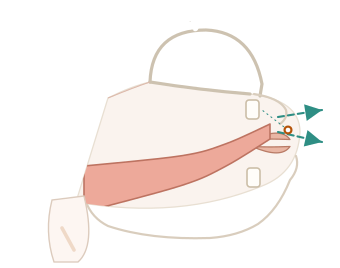
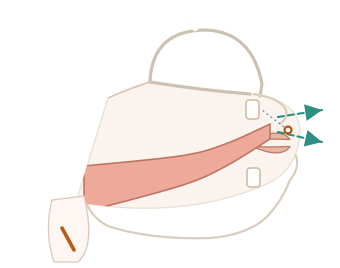
Articulation (side view)
One speaker, one instant: tongue position and lip shape only. The amber circle marks what to look at; the caption says how it differs from the sound it is usually confused with.
What English speakers get wrong
English already has /θ/, so the difficulty here is not the sound itself — it is knowing which letter gets it, and resisting English habits.
Reading z as English /z/
English z is a voiced alveolar fricative. Spanish z is voiceless and dental. Voicing is the whole error: the tongue is in the wrong place and the folds are vibrating.
Fix: keep the English th position, and make sure nothing buzzes in the throat.
Reading c(e,i) as /s/ or /k/
English c before e or i is /s/ (cent, city). Spanish, in Spain, is /θ/. This is a pure spelling-to-sound transfer error, and it is extremely consistent.
Note it is not an error in Latin America, where seseo makes /s/ correct. The error is using the Latin American rule while aiming at Spain — or vice versa.
Using the English th, too weakly
English /θ/ is often a quick, low-intensity gesture. Spanish θ carries more friction energy and longer duration. Measured on this page, Spanish θ runs 40–81 ms.
If your θ sounds like a passing breath rather than a hiss, it reads as an English accent.
Voicing it between vowels
Spanish does voice /θ/ to [ð] in some contexts, but not freely. In azul, azahar, jazmín the z stays voiceless.
Also watch the reverse: casa [ˈkasa] and caza [ˈkaθa] are a true minimal pair in Spain. If they sound identical, the contrast has collapsed.
Word list
14 words grouped by where the sound sits in the word. Click a word to hear it. These are recorded as separate words, not cut out of the sentences above — a word cut from a sentence carries its neighbours' transitions and always sounds muddier. All three groups use the same speaker, so what changes between them is position, not voice.
Word-initial4
Word-medial8
Word-final2
Corpus and acoustic measurements
Click any word in a sentence to play from that word. The pale band over the waveform marks the measured boundary of the target word.
Per-token data
Every number below is measured directly from the audio, not hand-annotated.
| Token | Accent | Sex | Target | Word length | θ length | F0 | Pitch range | HNR |
|---|
How the data was produced
This section explains how each number is computed, so it can be checked.
Corpus: 24 Spanish sentences from a speech synthesiser across four voices — Spain (es-ES) male and female, Mexico (es-MX) male and female. Four of them are the same sentence recorded on both continents. Audio is 22.05 kHz mono at 64 kbps, clipped from 1.2 s before the target word to 1.5 s after.
Word boundaries: MMS_FA forced alignment. Word and phoneme boundaries come from the same pass rather than being computed separately — two independent sets drift apart, and a phoneme that runs outside its word leaves no visible trace on the page. The target word is marked by the pale band over the waveform.
Phonemes: also from MMS_FA forced alignment. Spanish spelling is transparent and has almost no silent letters (only h, and u in qu/güe), so letters map to phonemes nearly one-to-one — all 77 words across the 12 items on this page came back char-anchored. The boundaries are anchored to real character boundaries, not distributed by proportion. Timing precision is the 20 ms model frame.
F0 and HNR: Praat autocorrelation with a 10 ms frame step, search range narrowed to the speaker's range from the whole sentence with octave errors removed; HNR via to_harmonicity_cc.
Frication centroid and >6 kHz share: taken from the three highest zero-crossing-rate frames within the target word (±80 ms), then FFT'd. The Spanish version is non-sibilant (energy spread), the Latin American version is sibilant (energy concentrated high). This is the acoustic check behind the phoneme relabelling.
Download the offline copy (audio embedded, opens without a server)