tʃ and dʒ: this time length is the whole story
The previous two pages (s / ʃ, z / ʒ) split on the spectrum, with duration either secondary or unmeasurable. This page is the other way round: the spectrum does not separate them, length does.
The reason is the shape of an affricate — a full closure followed by frication. In a voiced affricate the vocal folds are already vibrating during the closure, the pressure difference across the constriction is small, and the frication that follows is short. A voiceless one starts its airflow only when the closure releases, so its frication is long. That difference lives in time, not in frequency.
Six pairs: only the first sound differs
All six are true word-initial minimal pairs — both /tʃ/ and /dʒ/ occur freely at the start of English words, which is rare among consonants.
Left and right are read by the same speaker; the highlighted symbol is the sound being measured.
This page does not list a centroid: the frication centroid agrees in only 13 of 18 comparisons, and printing it would suggest it is usable.
It also does not split the affricate into “closure” and “frication” rows: the probe tried cutting them by energy envelope and four of the six pairs produced a 0 ms closure — a split that does not hold should not reach the page.
One clue, and it never missed
The previous page (z / ʒ) was “only the spectrum works”. This one is the exact opposite.
Duration: six for six, gaps from 9 to 31 ms
Within a pair /tʃ/ is longer than /dʒ/ by 31, 30, 20, 21, 9, 20 ms, in that order. The smallest is cheer/jeer at 9 ms; the largest is chin/gin at 31 ms.
All six go the same way — not one reverses. That is the steadiest single clue anywhere on this site.
The gaps themselves run from 9 ms to 31 ms, three tiers apart, so what you remember is the direction, not an amount.
The spectrum: no help here
Cutting out the frication and taking its centroid gives the same direction in only 13 of 18 comparisons; the share above 6 kHz gives 12 of 18. Neither is usable.
This is not a measurement failure. The two sounds share their constriction location — both are post-alveolar. Voicing changes timing, not where the constriction is.
⇒ That is why this page shows no centroid. A 13/18 number would either mislead the reader or force them to distrust it first. Neither is worth printing.
The three pages only make sense together
Fricatives (s/ʃ, z/ʒ) split on the spectrum: different constriction locations give different energy distributions. Affricates (tʃ/dʒ) split on duration: same location, and what differs is the timing that comes with voicing.
Put another way, “voicing” is not one thing. In a fricative it shows up as low-frequency energy in the spectrum; in an affricate it shows up as the length of the frication.
So do not memorise a summary like “voiced sounds are shorter” — on the /z ʒ/ page it simply does not hold (three pairs show no measurable difference and the other three disagree in direction).
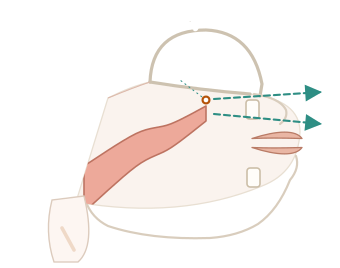
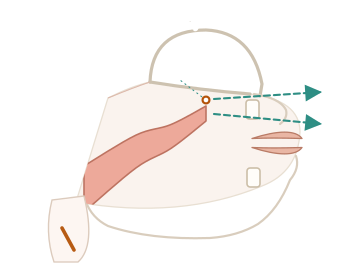
Articulation (side view)
One speaker, one instant: tongue position and lip shape only. The amber circle marks what to look at; the caption says how it differs from the sound it is usually confused with.
Spelling: both affricates have stable written forms
These two are far more predictable from spelling than any vowel. A few patterns, and one family of exceptions.
Native English ch is /tʃ/. French loanwords read it /ʃ/ (chef, machine) — that belongs to another page.
tch only occurs after a short vowel, is always /tʃ/, and marks that vowel as short.
-ture is usually /tʃə/; the t in -stion is also /tʃ/ (question /ˈkwestʃən/).
j is /dʒ/ everywhere. No exceptions.
g is /dʒ/ before e, i or y and /g/ elsewhere — exactly the mirror image of the c rule.
dge only occurs after a short vowel, is always /dʒ/, and does the same job as tch.
Four things Mandarin speakers get wrong
Two come from near neighbours in Mandarin, two from the idea that longer is enough.
Using pinyin q for tʃ
Pinyin q is a palatal affricate, with the constriction at the front of the hard palate — further forward and thinner than English /tʃ/.
English /tʃ/ constricts behind the alveolar ridge, with the tip slightly raised and the blade flat: a heavier sound.
Using pinyin zh for dʒ
Pinyin zh is a retroflex affricate: the tongue tip curls up. English /dʒ/ is not retroflex.
This one is harder to notice than the previous error — retroflexion colours the whole word, yet to many speakers it sounds “close enough”.
Devoicing dʒ into tʃ
Mandarin has no voiced affricates, and voicing is the first thing lost word-initially. Once it goes, the word becomes a different word — all six pairs here turn on exactly that one feature.
To check yourself: put a hand on your throat. On joke, vibration should already be there during the closure.
Thinking “just make it longer”
This page says /tʃ/ is naturally longer; it does not say longer is correct. Stretching /dʒ/ does not make it more accurate, it makes it sound like /tʃ/.
What you protect is the voicing, not the length. Length is the result, not the action.
Word list
27 words grouped by where the sound sits in the word. Click a word to hear it. These are recorded as separate words, not cut out of the sentences above — a word cut from a sentence carries its neighbours' transitions and always sounds muddier. All three groups use the same speaker, so what changes between them is position, not voice.
Word-initial9
Word-medial9
Word-final9
Corpus and acoustic measurements
Click any word in a sentence to play from that word. The pale band over the waveform marks the measured boundary of the target word.
Per-token data
Every number below is measured directly from the audio, not hand-annotated.
| Token | Accent | Sex | Target | Word length | Affricate length | F0 | Pitch range | HNR |
|---|
How the numbers were produced
This section describes how each value was computed, so it can be reproduced.
Corpus: 12 English sentences generated by a speech synthesiser. Every pair is read by the same speaker — the difference between the two words is the teaching point, and changing speaker would mix timbre into it.
Word boundaries: taken from the synthesiser's word-level timestamps (WordBoundary), with the fixed offset between the engine timeline and the audio start corrected per item.
Phoneme boundaries: forced alignment with the MMS_FA acoustic model, mapping character-level timestamps onto a phoneme sequence by dynamic programming. Time resolution is the model frame length of 20 ms (boundaries fall at the midpoint between character boundaries, about 10 ms effective).
Why there is no spectral data on this page: an affricate is a closure plus a frication, so running an FFT over the whole phoneme segment puts the near-silent closure into the energy denominator and dilutes both the centroid and the high-band share — the gap between the two sounds is flattened while every number still looks plausible and nothing raises an error. The probe also tried splitting the segment at the frication onset with a 10 ms energy envelope; in four of the six pairs the resulting closure came out at 0 ms, so the split is not reliable. Neither route works, which is why this page reports only the whole-segment duration.
A related measurement: even with the split, the frication centroid agrees in only 13 of 18 comparisons and the >6k share in 12 — the spectrum would not carry the argument.
Scope: this page shows how these sounds were distributed in this corpus, not a pronunciation standard. Do not memorise the absolutes; look at which of the two is longer inside a pair.
Transcription: American. IPA writes affricates with a tie bar, t͡ʃ and d͡ʒ; the page abbreviates them to tʃ and dʒ.